


Navigating the world of commercial real estate can feel overwhelming, but it doesn’t have to be. This guide, crafted by Houston-based experts at New Homes Houston Texas, simplifies the process for everyone. Whether you’re exploring your first property or expanding your portfolio, clear strategies make all the difference.
Commercial property offers unique opportunities, from office spaces to retail centers. Understanding market trends and property types is key to smart decisions. New Homes Houston Texas (954) 821-4492 provides localized insights to help you thrive in Houston’s dynamic market.
This resource blends foundational knowledge with actionable steps. You’ll learn to evaluate risks, identify growth areas, and leverage tax advantages. Reliable data and real-world examples ensure practical advice you can trust.
Key Takeaways
- Commercial assets often yield higher returns than residential properties
- Location analysis is critical in Houston’s evolving market
- Multiple property types (retail, industrial, office) offer diversification
- Local expertise improves negotiation and due diligence
- Long-term leases provide stable income streams
Introduction to Commercial Real Estate Investing
Building wealth through physical assets requires strategic planning and market awareness. At New Homes Houston Texas, we specialize in helping clients unlock opportunities in diverse property categories. This sector spans office buildings, shopping centers, warehouses, and mixed-use developments, each with distinct characteristics.
Understanding the Industry Landscape
Successful strategies begin with recognizing property classifications. Retail spaces thrive near residential hubs, while industrial zones demand accessibility to transport routes. Below is a breakdown of common categories:
| Property Type | Key Features | Typical Tenants |
|---|---|---|
| Office | Long-term leases, professional environments | Law firms, tech companies |
| Retail | High foot traffic locations | Restaurants, clothing stores |
| Industrial | Large square footage, loading docks | Manufacturers, logistics firms |
Key Benefits for Investors
Diversification stands out as a major advantage. Unlike residential units, business leases often last 3-10 years, creating predictable cash flow. Tax incentives like depreciation deductions further enhance returns.
Thorough due diligence minimizes risks. Partnering with local experts like New Homes Houston Texas ensures access to zoning updates and demographic trends. Whether you’re starting out or scaling up, knowledge transforms buildings into lasting value.
Understanding How to Invest in Commercial Real Estate

Successful ventures in property markets begin with mastering core principles. Understanding financial frameworks and market dynamics separates casual buyers from strategic asset builders. This foundation enables informed decisions when allocating resources.
The Basics and Importance of CRE
Effective strategies require balancing risk management with growth potential. Proper planning ensures adequate capital reserves for unexpected expenses while positioning assets for appreciation. One industry study found properties with structured financing plans outperformed others by 23% over five years.
Three elements drive success in this field:
- Clear alignment between personal objectives and property types
- Thorough analysis of cash flow projections
- Strategic partnerships with financial institutions
Market growth patterns significantly influence returns. Houston’s 4.2% annual population increase creates demand for mixed-use developments, demonstrating location-specific opportunities. As one wealth manager notes: “Properties become profitable when numbers and neighborhood trends tell the same story.”
New investors often overlook tax advantages and lease structures that enhance profitability. Working with specialists helps navigate these complexities, turning theoretical knowledge into actionable strategy. This approach transforms initial investments into enduring revenue streams.
Evaluating Different Types of Commercial Properties
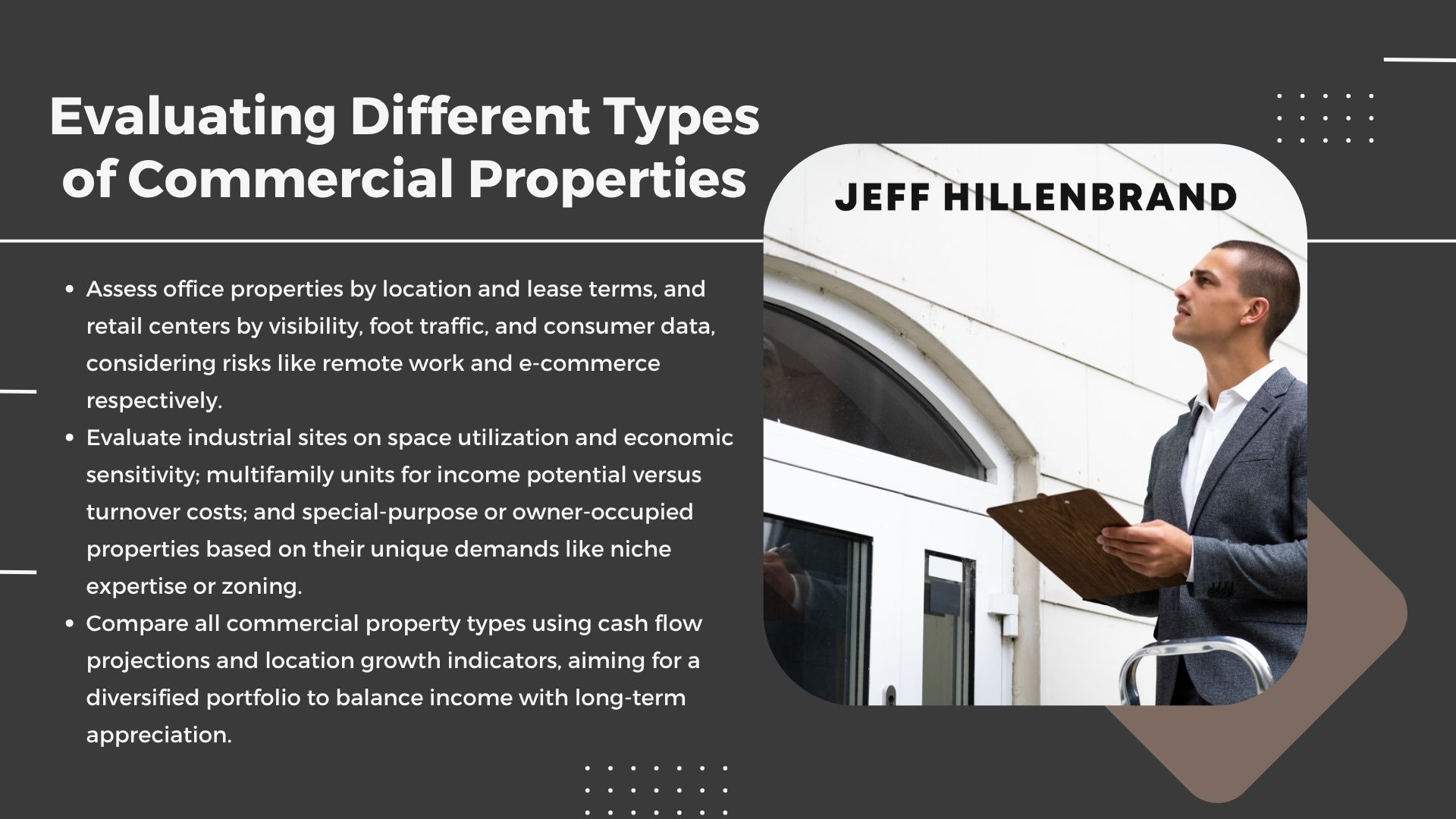
Commercial properties offer a spectrum of opportunities for savvy investors. Each category demands unique evaluation criteria to match your financial goals. Let’s explore the characteristics that define success across various assets.
Office, Retail, and Industrial Investments
Office buildings appeal to businesses seeking professional environments. Look for locations near transportation hubs and amenities. Longer lease terms often provide stability but require tenant retention strategies.
Retail centers thrive on visibility and foot traffic. Anchor tenants like grocery stores boost smaller retailers’ viability. Consider population density and consumer spending patterns when evaluating these assets.
| Property Type | Key Metric | Risk Factor |
|---|---|---|
| Industrial | Square footage utilization | Economic sensitivity |
| Retail | Foot traffic counts | E-commerce competition |
| Office | Vacancy rates | Remote work trends |
Multifamily, Special-Purpose, and Owner-Occupied Properties
Multifamily units generate consistent income but face higher turnover costs. Special-purpose assets like hotels require niche expertise but offer premium returns. One industry report notes: “Specialized properties often outperform generic spaces during market shifts.”
Owner-occupied buildings blend business operations with equity growth. These investments demand:
- Zoning compliance checks
- Custom renovation budgets
- Exit strategy planning
Compare property types using cash flow projections and location growth indicators. A diversified portfolio balances short-term income with long-term appreciation potential.
Setting Investment Objectives and Strategies
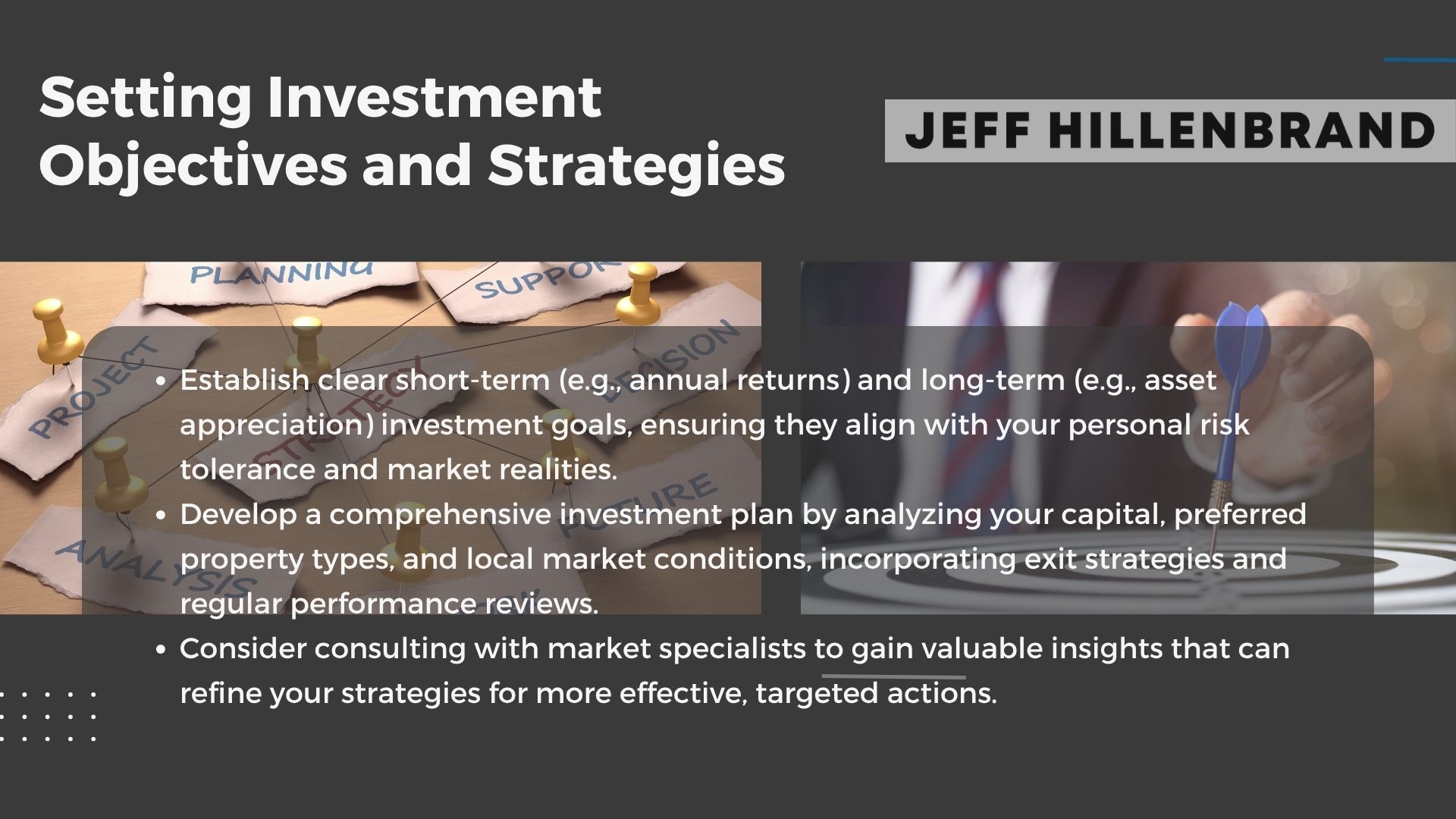
Smart wealth-building starts with a roadmap. Clear targets guide decisions and help measure progress over time. Whether aiming for steady income or portfolio expansion, aligning ambitions with practical steps creates a path to success.
Defining Short-Term and Long-Term Goals
Effective plans balance immediate needs with future growth. Short-term objectives might focus on securing 8-12% annual returns through leased properties. Long-term aims could involve acquiring assets in emerging neighborhoods for appreciation. A 2023 industry study found investors who set both types of goals achieved 34% higher profitability over a decade.
Personal risk tolerance shapes these choices. Conservative approaches prioritize stable cash flow from established retail centers. Growth-oriented strategies might target value-add industrial spaces requiring renovations. As one portfolio manager notes: “Your goals should match both market realities and sleep-at-night comfort levels.”
Creating a Comprehensive Investment Plan
Actionable blueprints translate ideas into results. Start by analyzing:
- Available capital and financing options
- Preferred property types (retail, office, industrial)
- Local market vacancy rates and rental trends
Include exit strategies for unexpected scenarios, like sudden interest rate hikes. Regular performance reviews ensure adjustments align with shifting economic conditions. Partnering with specialists at New Homes Houston Texas adds localized insights, turning generic strategies into Houston-specific wins.
Conducting Market Research and Due Diligence

What separates thriving investors from those who struggle? Rigorous preparation. A 2023 National Association of Realtors study found properties backed by market analysis achieved 27% higher returns than impulse purchases. Effective strategies blend data-driven insights with boots-on-the-ground verification.
Analyzing Local and National Trends
Start by comparing regional growth patterns. Houston’s 3.9% annual job growth rate outpaces the national average, signaling strong demand for retail spaces. Meanwhile, rising interest rates nationwide impact lending terms. Track these metrics:
| Local Factors | National Factors |
|---|---|
| Neighborhood vacancy rates | Federal Reserve policies |
| New infrastructure projects | Consumer price index trends |
Verify tenant credibility through credit checks and lease histories. One property manager notes: “A restaurant chain’s five-year lease means little if their financials show declining sales.” Always confirm cash reserves for unexpected repairs or vacancies.
Real estate investors often share hyperlocal insights through industry networks. Join Houston’s commercial broker forums to access unlisted opportunities. Finalize due diligence by:
- Reviewing three years of utility bills
- Confirming zoning compliance
- Testing mechanical systems
Stay disciplined. Create checklists for every property evaluation phase. As market conditions shift, adaptable strategies protect your portfolio while uncovering hidden value.
Exploring Investment Opportunities and Financing Options
Securing the right financial tools transforms property visions into profitable realities. Diverse funding solutions exist for different risk profiles and growth objectives. This section breaks down proven approaches to align your strategy with market conditions.
Financing Methods: Commercial Mortgages and SBA Loans
Traditional lending products remain popular for their structured repayment plans. Commercial mortgages typically require 20-30% down payments with 5-25 year terms. SBA loans offer government-backed options for smaller ventures, often featuring lower interest rates.
| Loan Type | Interest Rate | Key Requirement |
|---|---|---|
| Commercial Mortgage | 5.5%-7.5% | Strong credit score (680+) |
| SBA 504 Loan | 4.5%-6.5% | 10% down payment |
Industry analyst Mark Tabor notes: “Loan structures directly impact cash flow. A 1% rate difference can save $12,000 annually on a $1M mortgage.” Compare multiple lenders to balance upfront costs with long-term returns.
Partnerships, Syndications, and Alternative Funding
Collaborative models reduce individual risk while pooling resources. Real estate syndications allow passive investors to join projects managed by experienced operators. Private equity partnerships often target larger assets like shopping malls or apartment complexes.
Three factors determine suitable funding routes:
- Time commitment for active management
- Available capital reserves
- Target hold period for assets
Alternative options like crowdfunding platforms provide accessibility but may limit control. Always review fee structures and exit clauses. Partnering with New Homes Houston Texas ensures access to vetted opportunities matching Houston’s growth corridors.
Practical Steps for Real Estate Investing
Turning property visions into profitable assets requires disciplined execution. This section outlines proven methods for identifying quality deals while maintaining financial stability. Focus on actionable techniques used by seasoned professionals to balance growth and security.
Finding and Evaluating Properties
Start with digital platforms like LoopNet and CREXi to discover listings. Cross-reference these with local tax records to identify owners of underutilized assets. Attend industry networking events to access off-market opportunities before they hit public databases.
| Evaluation Criteria | Retail Space | Warehouse |
|---|---|---|
| Roof Condition | Check for water damage | Inspect loading docks |
| Tenant History | Review sales per square foot | Verify lease expiration dates |
| Utility Costs | Analyze HVAC efficiency | Assess energy consumption |
Always request three years of operating statements. Compare actual expenses against regional averages using tools like Stessa. One property manager advises: “A $2/sqft variance in maintenance costs can erase 15% of projected profits.”
Managing Cash Flow and Risk
Track income and expenses through cloud-based software like AppFolio. Allocate 8-12% of monthly revenue to a reserve fund for emergencies. Schedule quarterly inspections to catch maintenance issues early.
Strengthen tenant relationships with:
- 24-hour response guarantees for repairs
- Transparent utility cost breakdowns
- Lease renewal incentives
Review insurance policies annually to cover evolving risks like climate-related damages. Partner with local contractors for discounted preventive maintenance packages. Consistent oversight transforms unpredictable ventures into reliable wealth-building vehicles.
Investment Strategies for New Homes Houston Texas Investors
Building a profitable portfolio requires matching your approach to market conditions and personal goals. Three distinct methods dominate Houston’s landscape, each offering different risk-reward profiles. Local investors often combine these tactics to balance stability with growth potential.
Core, Core-Plus, and Value-Add Strategies
Core strategies focus on low-risk assets like fully leased office towers. These properties generate steady returns but offer limited upside. Core-plus options target minor upgrades, such as renovating lobbies to boost rental rates.
Value-add opportunities demand active management. A Houston investor recently transformed a vacant medical complex into mixed-use space, increasing occupancy from 45% to 92%. These projects require:
- Upfront capital for renovations
- Market timing expertise
- Strong tenant acquisition plans
Direct Ownership vs. Indirect Investment Vehicles
Direct control suits hands-on investors seeking tax benefits and decision power. Indirect options like REITs provide diversification with lower effort. Consider this comparison:
| Approach | Minimum Capital | Management Role |
|---|---|---|
| Direct Ownership | $500k+ | Full responsibility |
| Syndications | $50k+ | Passive participation |
New Homes Houston Texas clients often blend both methods. One group purchased a retail plaza directly while diversifying into industrial REITs. As market trends shift toward mixed-use developments, adaptable strategies yield the strongest results.
Navigating Risks and Rewards in Commercial Investments
Every financial venture carries inherent challenges alongside potential gains. Astute asset builders recognize that success lies in balancing these elements through proactive planning and adaptive strategies.
Mitigating Financial and Regulatory Risks
Market shifts and tenant turnover can disrupt cash flow without warning. A 2023 CBRE report found properties with thorough tenant screenings experienced 40% fewer defaults. Key risks include:
- Economic downturns affecting lease renewals
- Zoning law changes impacting property usage
- Unexpected maintenance costs eroding profits
| Risk Type | Prevention Strategy |
|---|---|
| Tenant Vacancies | Multi-year lease incentives |
| Interest Rate Hikes | Fixed-rate loan options |
| Regulatory Changes | Monthly compliance audits |
Insurance products like loss-of-rent coverage protect against sudden vacancies. As financial advisor Lisa Moreno notes: “The difference between thriving and surviving often comes down to reserve funds covering 6-8 months of expenses.”
Compare lending rates annually to optimize financing costs. Energy-efficient upgrades in HVAC systems can reduce utility bills by 18%, directly boosting returns. Partnering with legal experts ensures adherence to evolving building codes and ADA requirements.
While risks exist, strategic planning transforms challenges into opportunities. Properties with robust safeguards often outperform others by 19% in five-year growth periods, proving that calculated risks drive lasting success.
Utilizing Professional Guidance and Local Expertise
Partnering with experienced professionals transforms complex transactions into manageable steps. Seasoned advisors decode market nuances and streamline processes that might overwhelm individual investors. Their insights often reveal hidden opportunities while sidestepping common pitfalls.
Leveraging the Expertise of New Homes Houston Texas
New Homes Houston Texas combines hyperlocal knowledge with proven strategies. Based in Houston, TX, their team identifies emerging neighborhoods and zoning changes affecting building valuations. Clients gain access to:
| Independent Approach | Guided Strategy |
|---|---|
| Limited market data access | Real-time lease rate comparisons |
| Generic due diligence checklists | Customized risk assessment tools |
| Reactive problem-solving | Preemptive maintenance planning |
One client secured a 14% higher return on a retail plaza after leveraging their tenant screening systems. “Their team flagged lease expiration dates we’d overlooked,” the business owner noted. “That foresight saved six months of vacancy costs.”
Contact New Homes Houston Texas at (954) 821-4492 for tailored support. Their specialists handle everything from due diligence to lease negotiations, letting you focus on growth. As estate investment landscapes evolve, trusted partnerships become indispensable for sustainable success.
Emerging Trends and Future Growth in CRE
Houston’s skyline tells a story of evolving opportunities. Recent data shows commercial spaces adapting to shifting economic demands, creating fresh potential for asset growth. Forward-thinking strategies now focus on sectors showing resilience amid changing consumer behaviors.
Market Trends in Houston and the Broader U.S.
Houston’s vacancy rates fell to 8.2% in Q1 2024, outperforming the national average of 9.6%. Retail spaces near suburban hubs see rising demand, with lease rates climbing 4.3% year-over-year. Industrial properties benefit from e-commerce growth, requiring 15% more warehouse space than pre-pandemic levels.
| Metric | Houston | National |
|---|---|---|
| Retail Vacancy | 5.1% | 4.7% |
| Office Construction | +12% | +6% |
| Rent Growth (Industrial) | 7.8% | 5.4% |
Macroeconomic factors like interest rates and supply chain shifts shape property values. Assets in logistics corridors gained 18% appreciation since 2022. Retail centers with experiential offerings – think fitness studios or cooking classes – attract 22% more foot traffic.
Investors eye mixed-use developments blending residential and retail elements. These projects report 30% faster lease-ups than single-purpose buildings. Staying updated on zoning changes ensures alignment with Houston’s infrastructure expansions.
Conclusion
Strategic property decisions shape financial futures when approached thoughtfully. This guide highlights the importance of aligning goals with market realities—whether pursuing stable income or long-term growth. Structured planning, thorough research, and expert partnerships form the foundation of successful ventures.
Commercial assets offer diverse paths to wealth creation. From steady cash flow to value appreciation, opportunities exist across property types and strategies. Local insights prove invaluable when navigating Houston’s dynamic landscape, where emerging corridors and zoning shifts impact outcomes.
New Homes Houston Texas equips clients with tools for informed decision-making. Their team bridges market knowledge with practical steps, from due diligence to exit planning. Whether exploring direct ownership or alternative options, calculated moves yield lasting rewards.
Ready to transform potential into progress? Begin by assessing your financial position and risk tolerance. With sound preparation and trusted guidance, every investor can build a portfolio designed for resilience. Your journey toward tangible assets starts today.
FAQ
What advantages do commercial properties offer over residential investments?
Commercial assets often provide higher cash flow potential, longer lease terms, and diversification benefits. They can also hedge against inflation through rent escalations and value appreciation tied to market demand.
How do financing methods like SBA loans impact investment strategies?
SBA loans and commercial mortgages allow investors to leverage capital while preserving liquidity. Lower down payments and fixed-rate options enable scalable growth, particularly for multifamily or retail properties in growing markets like Houston.
What due diligence steps are critical before purchasing a commercial property?
Review financial statements, tenant leases, zoning laws, and environmental reports. Assess vacancy rates, repair costs, and local infrastructure projects. Partnering with firms like New Homes Houston Texas ensures access to localized data and risk assessments.
Which investment strategies work best for passive income seekers?
Core strategies focusing on stabilized assets (like leased office buildings) offer steady returns. Indirect options like REITs or syndications allow passive participation without direct management responsibilities.
How can investors mitigate risks in volatile markets?
Diversify across property types (retail, industrial, multifamily) and geographic areas. Maintain cash reserves for vacancies or repairs, and lock in long-term tenant leases. Local expertise helps navigate regulatory changes or economic shifts.
Why is Houston considered a strong market for commercial real estate?
Houston’s population growth, business-friendly policies, and expanding industries like energy and healthcare drive demand. Strategic investments in mixed-use developments or logistics hubs align with the city’s economic trajectory.
What role do partnerships play in commercial real estate investing?
Joint ventures or syndications pool resources for larger acquisitions while spreading risk. Collaborating with experienced operators provides access to off-market deals and streamlined property management.
How do tax benefits influence commercial property returns?
Depreciation deductions, 1031 exchanges, and mortgage interest write-offs enhance net profitability. Consult tax professionals to structure holdings (e.g., LLCs) for optimal savings and compliance.